A recent article has me dreamily in the clouds.
One of my favorite night journeys doesn't happen nearly enough. I've had flying dreams since I was a child. They're never scary, always exhilarating and surprising.
I assumed that everyone experienced these flights of nighttime fancy, but have found that it's not true. Maybe that's why, in my dreams, I often try to teach other people how easy it is to fly.
I'm rarely aware of lucid dreams, and can't will myself to dream anything in particular. I wish I could. But then I would lose the delight of surprise. In fact, when these special dreams happen, I'll suddenly realize that I'm flying and the joy that accompanies it surpasses anything in my waking life.
In the "real" world, I've always had trouble being punctual. I'm getting better, but it takes great deliberation to get places on time. (Jill has helped with this -- she just gets in the car and I know it's time to speed it up.) For years I've claimed that the reason I'm late is that I still believe, from some previous existence, that I can leave and arrive at the same time. See how this all fits in?
In 1979, I had a near-death experience in a medical setting. It was amazing and not at all frightening. In fact, it was sublimely joyful, and changed me in subtle ways. Only when I am asleep and flying have I been able to come close to that experience again.
I know, I know. It's brain stuff. Something to do with neurons and synapses and neurotransmitters. I'm down with that. I like science. I'm used to brain-based, pleasure-center experiences carrying me into alternate realities. I'm an ex-addict, remember? But that doesn't mean that I can't enjoy zipping through the universe in my dreams.
Life is full of mysteries. One of the speculative observations in that article stated that people with positive mindsets are more likely to experience flying dreams. I choose that theory.
The happier I am, the more I fly. And now I can do it without substances. Pretty cool.
Monday, February 15, 2016


Thursday, February 11, 2016
Where do ideals fit in?
I was reading an article this morning that reported on results from some focus groups with Millennials. Take that as you will. I am the mother of a so-called Millennial, and a so-called Gen-X, neither of whom like those labels and will tell you so. Me, I'm an out and proud Boomer. What can I say?
I know I'm biased. I happen to have an innate optimism about life in general, and young people in particular. I will never yell at you to get off my lawn. (However, I will strongly suggest you do not tease my dog. He'll likely bite you.) So as I read poll results, political, religious, social, environmental, whatever, I tend to see them through my several biased lenses.
This particular piece was articulating results from political focus groups. That's the biggie right now, isn't it? What in the world is going on in this election cycle? And who are the youngin's going to vote for in the end?
Being a self-proclaimed Boomer of the late-leading-edge variety (1950), I came of age in the 1960s with all its tumult and idealism. I still wonder where all those folks I used to protest with on the U of I quad have gone. (Well, besides hanging out in Unitarian-Universalist circles.) Of course, when you're in the middle of a cataclysm, you think that the entire world is on fire, when actually there were tens of millions of my cohort who were bumbling along, shaking their heads, going to war, wondering what in hell those liberal-hippie-commie-love-children were doing. "GET A JOB!"
To me, it was my entire generation and it was some heady stuff, indeed. We were bringing on the revolution. We were changing everything. Power to the People!
Maybe that's why I'm inclined to be more in sync with the young voters who are massing around Bernie Sanders' political revolution. It may never come to pass, at least not like he and his followers envision, but the idealism and the energy are invigorating. They prod my hope and feed my optimism.
They also shine a light on my cynicism. Yeah, but it's too late for all that. That ship has sailed. We're all in this creaky little lifeboat and about to be washed over and sunk. David and Goliath is a myth, and anyway Donald Trump and Ted Cruz are like leering caricatures of giant Goliath, and the Sanders folk are feebly waving pitchforks against a tidal wave.
The other factor, the one I'm least proud of, is my claim to age and experience. It gives me some comfort, and provides a little cover. But it's an unattractive quality that I'm quick to point out when I see it in the cynical, fatalistic politicos who deny climate change while stuffing their pockets with donations. "What the hell --- I'm going to die soon anyway. I won't be around to see what happens."
That, my friends, is the worst. When I find myself making the logical, pragmatic arguments, am I really just saying, "Meh, I'm queued up for the infinity ride ---- ya'll take over and I'll see you on the other side." Now that's the position of no personal responsibility. Who is that person?
It comes down to this, as it always has. Do I go with my gut, my values, my hope, my ideals? Or do I go with practicality and down-to-earth reality? Is it really an either/or?
(Back in the dark ages, before Jill moved into the land of light and love, we had an argument about the use of the Peace Rose in my classroom. It was a means of teaching 6-8 year olds to solve their own disputes without the adults getting involved. We used an actual (silk) rose which they passed between them as they worked things out. Jill accused me of always wearing rose-colored glasses, that teaching peace to children was a hopeless effort. You should see the pink lenses she wears these days!)
Boomers, all of us, are shuffling off stage left. We're not done yet, not by a long shot, but that's the direction the line is moving. And, as they should, our children, grandchildren, and great-grandchildren ---- I can't believe how many of my friends are great-grandparents now! ----- are in place to take over. It's always happened. It always will. It may be hard to give up the reins of power and the rock-solid beliefs and values we formed in a different world 60 or 70 years ago, but that's the way it goes. This is a new place and time.
Gen X. Millennials. Whatever the next ones are called. It's their show now. We better pay attention because they're the ones calling a lot of the shots. In some ways, it makes it easier. I can go cast my vote. I can work for a candidate if I want to. I can volunteer at a non-profit I believe in. I can Morally March. I can still do all of that, and I don't have to get so wound up that I lose sleep or raise my blood pressure.
Maybe I can still hold onto my ideals after all.

I know I'm biased. I happen to have an innate optimism about life in general, and young people in particular. I will never yell at you to get off my lawn. (However, I will strongly suggest you do not tease my dog. He'll likely bite you.) So as I read poll results, political, religious, social, environmental, whatever, I tend to see them through my several biased lenses.
This particular piece was articulating results from political focus groups. That's the biggie right now, isn't it? What in the world is going on in this election cycle? And who are the youngin's going to vote for in the end?
Being a self-proclaimed Boomer of the late-leading-edge variety (1950), I came of age in the 1960s with all its tumult and idealism. I still wonder where all those folks I used to protest with on the U of I quad have gone. (Well, besides hanging out in Unitarian-Universalist circles.) Of course, when you're in the middle of a cataclysm, you think that the entire world is on fire, when actually there were tens of millions of my cohort who were bumbling along, shaking their heads, going to war, wondering what in hell those liberal-hippie-commie-love-children were doing. "GET A JOB!"
To me, it was my entire generation and it was some heady stuff, indeed. We were bringing on the revolution. We were changing everything. Power to the People!
Maybe that's why I'm inclined to be more in sync with the young voters who are massing around Bernie Sanders' political revolution. It may never come to pass, at least not like he and his followers envision, but the idealism and the energy are invigorating. They prod my hope and feed my optimism.
They also shine a light on my cynicism. Yeah, but it's too late for all that. That ship has sailed. We're all in this creaky little lifeboat and about to be washed over and sunk. David and Goliath is a myth, and anyway Donald Trump and Ted Cruz are like leering caricatures of giant Goliath, and the Sanders folk are feebly waving pitchforks against a tidal wave.
The other factor, the one I'm least proud of, is my claim to age and experience. It gives me some comfort, and provides a little cover. But it's an unattractive quality that I'm quick to point out when I see it in the cynical, fatalistic politicos who deny climate change while stuffing their pockets with donations. "What the hell --- I'm going to die soon anyway. I won't be around to see what happens."
That, my friends, is the worst. When I find myself making the logical, pragmatic arguments, am I really just saying, "Meh, I'm queued up for the infinity ride ---- ya'll take over and I'll see you on the other side." Now that's the position of no personal responsibility. Who is that person?
It comes down to this, as it always has. Do I go with my gut, my values, my hope, my ideals? Or do I go with practicality and down-to-earth reality? Is it really an either/or?
(Back in the dark ages, before Jill moved into the land of light and love, we had an argument about the use of the Peace Rose in my classroom. It was a means of teaching 6-8 year olds to solve their own disputes without the adults getting involved. We used an actual (silk) rose which they passed between them as they worked things out. Jill accused me of always wearing rose-colored glasses, that teaching peace to children was a hopeless effort. You should see the pink lenses she wears these days!)
Boomers, all of us, are shuffling off stage left. We're not done yet, not by a long shot, but that's the direction the line is moving. And, as they should, our children, grandchildren, and great-grandchildren ---- I can't believe how many of my friends are great-grandparents now! ----- are in place to take over. It's always happened. It always will. It may be hard to give up the reins of power and the rock-solid beliefs and values we formed in a different world 60 or 70 years ago, but that's the way it goes. This is a new place and time.
Gen X. Millennials. Whatever the next ones are called. It's their show now. We better pay attention because they're the ones calling a lot of the shots. In some ways, it makes it easier. I can go cast my vote. I can work for a candidate if I want to. I can volunteer at a non-profit I believe in. I can Morally March. I can still do all of that, and I don't have to get so wound up that I lose sleep or raise my blood pressure.
Maybe I can still hold onto my ideals after all.

Saturday, January 23, 2016
What came first, the past or the future?
The news broke a couple of days ago that aerial images show evidence that a 1400 year old Christian monastery has been destroyed in Iraq. As with earlier destruction of antiquities, I read it with sorrow and a personal sense of loss. I'm not a Christian, I'm not a scholar of the ancient world, nor am I an archaeologist. But when singular objects or sites are lost, it feels similar to a species going extinct. It will never be there again, and that troubles me.
There will probably be consternation and outrage in some quarters over this from people who take it as an affront to their religion or culture. As for me, it has made me pause and bring it home. It's representative of my growing sense of impermanence.
Remember when you were a kid and summer vacation was a million miles away and the thought of being in high school was like some movie that you'd never star in? It was hard to project very far ahead, and even harder to imagine what the future would look like in 20 years. On this end of the spectrum, it's not hard at all to project ---- I probably do too much of it ---- but it's still hard to picture what the future will look like. One thing is certain, though. It won't be the same as today.
 I like old stuff and always have. I did want to be an archaeologist when I was young, at least until I realized that it involved heat, dirt, and worst of all, bugs. But concrete articles from bygone eras fascinate me, whether it's clothing, implements, furniture, or buildings. I'm intrigued by how people lived and how we are connected to what came before.
I'm not as much interested in the future; it seems shadowy and confusing to think about. It makes my brain tired. That's not a value judgment. It's more like an orientation.
When I hear of destruction like that in Palmyra or Iraq, my first feeling is horror. But it has been happening forever and is part of the process of life. Destruction and creation go hand in hand. My idea of what should be preserved, and even venerated, doesn't necessarily fit with other people's. If every building from the 1850s in Manhattan still stood, New York would not be the city it is today. There is inherent tension between the old and the new and it is never resolved.
I have often mentioned that our house is filled with several generations worth of "stuff" --- photos, documents, paintings, books, furniture, all passed through the family for as many as five generations.
 I know full well that I'm not the only 60-something person who has become the repository of the family heirlooms. What will beome of that collection?
When a building revered by one tribe or religion is destroyed by another, can we be surprised? What is valuable to one group represents idolatry to another. Similarly, what is valued in a family heirloom is the meaning brought to it by association. It is not to be expected that others, separated by time or distance, would hold that same veneration. They might view it as old junk to be removed to make way for something new. And maybe they would be right. But not while I'm around.
Old houses. Neglected churches. Deserted schools. Empty rocking chairs. All were filled with life once, alive with the voices of people long gone. Those are the whispers that haunt me.
There will probably be consternation and outrage in some quarters over this from people who take it as an affront to their religion or culture. As for me, it has made me pause and bring it home. It's representative of my growing sense of impermanence.
 |
| Andrew being a kid |
Remember when you were a kid and summer vacation was a million miles away and the thought of being in high school was like some movie that you'd never star in? It was hard to project very far ahead, and even harder to imagine what the future would look like in 20 years. On this end of the spectrum, it's not hard at all to project ---- I probably do too much of it ---- but it's still hard to picture what the future will look like. One thing is certain, though. It won't be the same as today.
 I like old stuff and always have. I did want to be an archaeologist when I was young, at least until I realized that it involved heat, dirt, and worst of all, bugs. But concrete articles from bygone eras fascinate me, whether it's clothing, implements, furniture, or buildings. I'm intrigued by how people lived and how we are connected to what came before.
I'm not as much interested in the future; it seems shadowy and confusing to think about. It makes my brain tired. That's not a value judgment. It's more like an orientation.
When I hear of destruction like that in Palmyra or Iraq, my first feeling is horror. But it has been happening forever and is part of the process of life. Destruction and creation go hand in hand. My idea of what should be preserved, and even venerated, doesn't necessarily fit with other people's. If every building from the 1850s in Manhattan still stood, New York would not be the city it is today. There is inherent tension between the old and the new and it is never resolved.
I have often mentioned that our house is filled with several generations worth of "stuff" --- photos, documents, paintings, books, furniture, all passed through the family for as many as five generations.

When a building revered by one tribe or religion is destroyed by another, can we be surprised? What is valuable to one group represents idolatry to another. Similarly, what is valued in a family heirloom is the meaning brought to it by association. It is not to be expected that others, separated by time or distance, would hold that same veneration. They might view it as old junk to be removed to make way for something new. And maybe they would be right. But not while I'm around.
Old houses. Neglected churches. Deserted schools. Empty rocking chairs. All were filled with life once, alive with the voices of people long gone. Those are the whispers that haunt me.
 |
| Buxton, Iowa |

Thursday, January 7, 2016
I Just Can't Believe It!
Since I spend way too much time online these days, I'm exposed to ideas, beliefs, and conspiracy theories that I never would encounter anyplace else. It's nearly enough to make me put the computer away, but then I'd have to do something constructive and that sounds way too tiring. I've been building a mental list of things that strike me as I poke around. See if it sounds familiar.
There are lots of words being spilled over the rampant fear that's charging over the land --- everything is scary. Terrorists. Guns. Opiates. Vaccines. Textbooks. Drug-resistant Disease. People of all kinds, colors, and nationalities: religious fanatics, invasive immigrants, big government, lying politicians, giant corporations, and on and on and on.
I wonder what people scared themselves with before the rise of mass communication. Death, of course, is the bottom line. There was a time, not so long ago, when infectious diseases were the the big fear. Anybody, anytime, could be struck down. You only have to walk around an old cemetery to begin to understand the precariousness of life just two generations ago. It's still like that in many parts of the world.
Right now, we live in a country with amazing public health measures in place. Instead of open sewers in the middle of the street, we have waste treatment plants. The water in our sinks, for most people (sorry, Flint Michigan) is safe; you're not risking typhoid every time you get a drink. Yet, millions of people don't trust the water and buy bottled water in plastic containers. Not based on warnings or having been sickened by it, just because....something.
Food supply. Yes, there are plenty of glitches, and problems do arise. Food poisoning, mainly from not following proper storage guidelines, is not uncommon. But we have nearly 330,000,000 people in this country and the vast majority of them eat well and safely, every single day. That's remarkable. And still there are entire corners of the internet scaring people witless about how poisonous their food is.
Crime! Guns! Crazy Criminals! It's almost too frightening to leave the house. To be absolutely safe, you can fortify your home with security systems, never let children out of sight, stay home and watch tv instead of going out in public places. You can even arrange to have almost everything you need delivered to your house. Just don't open the door when the delivery truck pulls up --- it could be a ruse.
Was it always this scary? I remember panics from years ago --- polio, communists, child snatchers --- so maybe it's just selective memory that makes it seem worse now. The thing is, living as though on the brink of disaster is no way to find happiness or satisfaction. So I just don't believe it.
I don't believe we're all headed to hell in a handbasket.
I don't believe everyone in any particular political party is terrible and out to ruin the country.
I don't believe any particular religion spells doom for the entire world.
I don't believe Big Business is scheming to create products and an economy which will leave everyone but the most elite to die in the streets.
I do believe that change is hard and sometimes frightening, and we are in a time of dizzying change.
People still have babies. Sometimes that surprises me, since mine were born so long ago. People still invent things --- amazing things --- that will help humankind. People still love each other, work together, laugh, show kindness for no reason other than kindness itself.
It's not all bad and scary. Yup, we're all going to die. It doesn't matter how much you pray to your favorite deity, it's still going to happen. It also doesn't matter how many times you go to the gym, how many ice cream sundaes you forego, whether you ever finish stitching that quilt or writing that book. It's still going to happen, and you can't stop it.
So if that's the scariest thing in the playbook, and it's inevitable, lighten up! It's just not that serious. Do what you like, love the people around you, and don't take yourself so seriously. Remember that graveyard with all the kids we talked about earlier? Destination vacation. You really can't take it with you --- there's just not room.
Every day is a new one, brand spanking new, and I, for one, don't believe it's all that bad.
There are lots of words being spilled over the rampant fear that's charging over the land --- everything is scary. Terrorists. Guns. Opiates. Vaccines. Textbooks. Drug-resistant Disease. People of all kinds, colors, and nationalities: religious fanatics, invasive immigrants, big government, lying politicians, giant corporations, and on and on and on.
I wonder what people scared themselves with before the rise of mass communication. Death, of course, is the bottom line. There was a time, not so long ago, when infectious diseases were the the big fear. Anybody, anytime, could be struck down. You only have to walk around an old cemetery to begin to understand the precariousness of life just two generations ago. It's still like that in many parts of the world.
Right now, we live in a country with amazing public health measures in place. Instead of open sewers in the middle of the street, we have waste treatment plants. The water in our sinks, for most people (sorry, Flint Michigan) is safe; you're not risking typhoid every time you get a drink. Yet, millions of people don't trust the water and buy bottled water in plastic containers. Not based on warnings or having been sickened by it, just because....something.
Food supply. Yes, there are plenty of glitches, and problems do arise. Food poisoning, mainly from not following proper storage guidelines, is not uncommon. But we have nearly 330,000,000 people in this country and the vast majority of them eat well and safely, every single day. That's remarkable. And still there are entire corners of the internet scaring people witless about how poisonous their food is.
Crime! Guns! Crazy Criminals! It's almost too frightening to leave the house. To be absolutely safe, you can fortify your home with security systems, never let children out of sight, stay home and watch tv instead of going out in public places. You can even arrange to have almost everything you need delivered to your house. Just don't open the door when the delivery truck pulls up --- it could be a ruse.
Was it always this scary? I remember panics from years ago --- polio, communists, child snatchers --- so maybe it's just selective memory that makes it seem worse now. The thing is, living as though on the brink of disaster is no way to find happiness or satisfaction. So I just don't believe it.
I don't believe we're all headed to hell in a handbasket.
I don't believe everyone in any particular political party is terrible and out to ruin the country.
I don't believe any particular religion spells doom for the entire world.
I don't believe Big Business is scheming to create products and an economy which will leave everyone but the most elite to die in the streets.
I do believe that change is hard and sometimes frightening, and we are in a time of dizzying change.
People still have babies. Sometimes that surprises me, since mine were born so long ago. People still invent things --- amazing things --- that will help humankind. People still love each other, work together, laugh, show kindness for no reason other than kindness itself.
It's not all bad and scary. Yup, we're all going to die. It doesn't matter how much you pray to your favorite deity, it's still going to happen. It also doesn't matter how many times you go to the gym, how many ice cream sundaes you forego, whether you ever finish stitching that quilt or writing that book. It's still going to happen, and you can't stop it.
So if that's the scariest thing in the playbook, and it's inevitable, lighten up! It's just not that serious. Do what you like, love the people around you, and don't take yourself so seriously. Remember that graveyard with all the kids we talked about earlier? Destination vacation. You really can't take it with you --- there's just not room.
Every day is a new one, brand spanking new, and I, for one, don't believe it's all that bad.
Saturday, December 26, 2015
What will you do with your short long life?
I have long had the practice of creating a list of "Goals and Intentions" during the week between Christmas and New Year. I pull out the old list, tick off the ones that came to fruition, and look ahead at what I'm aiming for next. I started doing this after (dare I say it?) taking the est training in the mid-seventies. Hmmm. That's forty years ago. I set it up as a game, not a rigid list of must-do projects. The year-end review was a chance to see how strong my intention had been. I never looked at the list from one December to the next.
The past few years I've been spotty about it. The list, when I do it, is much shorter. I think that reflects my focus on what's important as much as a narrowing of what's possible. Of course, I could be fooling myself.

The fact is, at the ripe old age of 65, happily married, gratefully retired, living comfortably on less, many of the items that made the list back in the day have already happened. I don't know that it had anything to do with listing out my goals and intentions. I think maybe they just occurred in the process of life.
So what to put on a list this year, 2016? I always tacked on an addendum called Outrageous Goals and Intentions, the things that I would love to see happen, but couldn't imagine any way for them to come about ---- mainly in the realm of fame, fortune, and travel. Now I consider myself fortunate that they didn't happen. I love my quiet little life, though I could do with a little more travel.

It has been one year and 11 days since my mother, Nancy, died. I have taken this entire year off. Oh, I did what had to be done ---- the legal finalities for her small estate, daily and weekly chores in the house, 6 months of being a produce fairy, delivering veggies for a local farm. I even accomplished becoming certified to teach the Qigong set I have been practicing for the last three years, and lined up 5 classes per week. But actually, I was pretty much on auto-pilot all year long.
Losing my mother, even though the Alzheimer's had taken her mind long ago, fundamentally shook my foundation. It was not simply that we were close, which we were. It was that since childhood I had trouble knowing where she ended and I began. Sometimes I had the odd sensation, when we were together, of looking at her and thinking it was me. I'm sure there are shrinks who can have a heyday with that. It's probably got troubling diagnoses and is the reason I have spent most of my life in and out of therapy. Nonetheless, that's the way it has been since before I can remember. I once wrote a short story in which the teenager who was pregnant and living with her in-laws tried to starve the baby out of her until she finally made the choice to keep and love it. When my mother read it, she cried and asked me how I knew. I don't know how I knew, except that I had lived it.

Now the world is a different place. I don't know if I'll ever quite adjust to it, but it's getting easier. In some ways, it's even better. There's more of me available now. And in my imagination she is free and wild, a kind of sparkling energy let loose in the universe, unconfined, uncontained.
As for me, I have a new freedom and a new happiness as well. I miss her ---- the old her ---- every day. At the same time, I'm developing a new perspective on lifespan. Even though I have had a love of history through fiction and non-fiction, museums and living history, when I was younger I didn't quite realize how short a time we have. Even the longest-lived among us can only claim a little over a century. Once upon a time, that felt like a very long life. Now it seems like the blink of an eye.
I personally knew my great grandparents, born shortly after the Civil War. The farmhouse my great-great grandfather G.W. built has now been torn down, I discovered this past
 summer. My mother and her siblings grew up in that house, Edgewood Farm. The past is not that distant. I have known people who lived during what we think is long-ago history. The "kids" I grew up with and I are becoming the keepers of the past, the tellers of stories from when the world was different. It all happens rather quickly.
This has been my year of reckoning. A time to look at the present and prepare for whatever is coming up next. It's unsettling. Occasionally, I'm afraid. But the overwhelming feeling is satisfaction. I haven't done so badly, no matter how many things never got knocked off of my lists. Sometimes, the best thing that can come of a goal is to not meet it.
My intention for this year? Curiosity.
The past few years I've been spotty about it. The list, when I do it, is much shorter. I think that reflects my focus on what's important as much as a narrowing of what's possible. Of course, I could be fooling myself.

The fact is, at the ripe old age of 65, happily married, gratefully retired, living comfortably on less, many of the items that made the list back in the day have already happened. I don't know that it had anything to do with listing out my goals and intentions. I think maybe they just occurred in the process of life.
So what to put on a list this year, 2016? I always tacked on an addendum called Outrageous Goals and Intentions, the things that I would love to see happen, but couldn't imagine any way for them to come about ---- mainly in the realm of fame, fortune, and travel. Now I consider myself fortunate that they didn't happen. I love my quiet little life, though I could do with a little more travel.
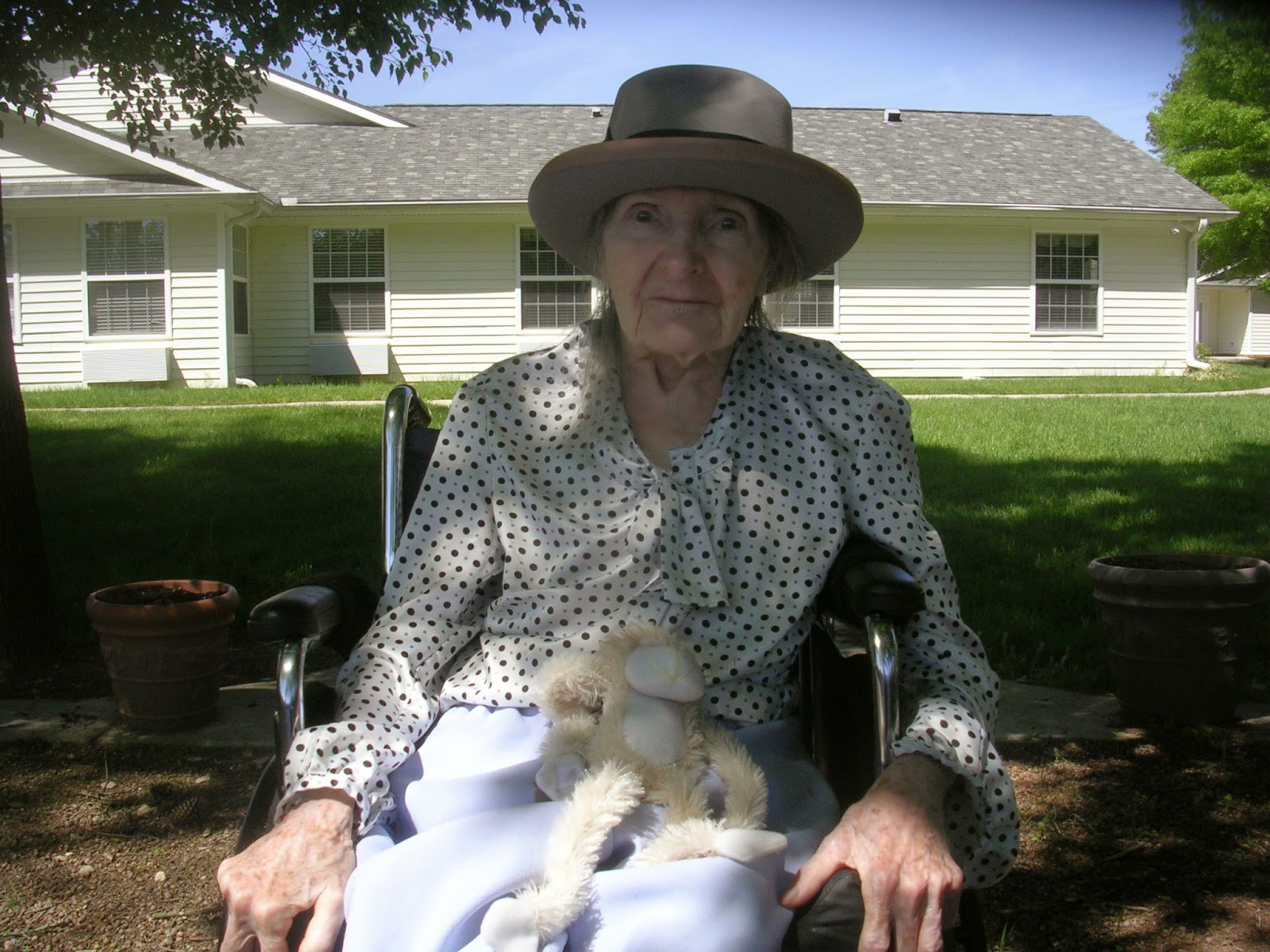
It has been one year and 11 days since my mother, Nancy, died. I have taken this entire year off. Oh, I did what had to be done ---- the legal finalities for her small estate, daily and weekly chores in the house, 6 months of being a produce fairy, delivering veggies for a local farm. I even accomplished becoming certified to teach the Qigong set I have been practicing for the last three years, and lined up 5 classes per week. But actually, I was pretty much on auto-pilot all year long.
Losing my mother, even though the Alzheimer's had taken her mind long ago, fundamentally shook my foundation. It was not simply that we were close, which we were. It was that since childhood I had trouble knowing where she ended and I began. Sometimes I had the odd sensation, when we were together, of looking at her and thinking it was me. I'm sure there are shrinks who can have a heyday with that. It's probably got troubling diagnoses and is the reason I have spent most of my life in and out of therapy. Nonetheless, that's the way it has been since before I can remember. I once wrote a short story in which the teenager who was pregnant and living with her in-laws tried to starve the baby out of her until she finally made the choice to keep and love it. When my mother read it, she cried and asked me how I knew. I don't know how I knew, except that I had lived it.

Now the world is a different place. I don't know if I'll ever quite adjust to it, but it's getting easier. In some ways, it's even better. There's more of me available now. And in my imagination she is free and wild, a kind of sparkling energy let loose in the universe, unconfined, uncontained.
As for me, I have a new freedom and a new happiness as well. I miss her ---- the old her ---- every day. At the same time, I'm developing a new perspective on lifespan. Even though I have had a love of history through fiction and non-fiction, museums and living history, when I was younger I didn't quite realize how short a time we have. Even the longest-lived among us can only claim a little over a century. Once upon a time, that felt like a very long life. Now it seems like the blink of an eye.
I personally knew my great grandparents, born shortly after the Civil War. The farmhouse my great-great grandfather G.W. built has now been torn down, I discovered this past

This has been my year of reckoning. A time to look at the present and prepare for whatever is coming up next. It's unsettling. Occasionally, I'm afraid. But the overwhelming feeling is satisfaction. I haven't done so badly, no matter how many things never got knocked off of my lists. Sometimes, the best thing that can come of a goal is to not meet it.
My intention for this year? Curiosity.
Tuesday, October 13, 2015
Life without Parole is a long time for Joanna Madonna
No police officer has ever stopped me on the street and frisked me. I've never been singled out by authorities because of how I look or who I am. My few encounters with law enforcement have been uneventful and non-threatening. But I have to admit, I see the justice system with new eyes after Joanna's conviction for first degree murder.
It all feels arbitrary and unpredictable now.
There was plenty of forensic evidence about the case. The prosecution presented every last item and photograph, with hours of testimony by professionals in one capacity or another. That's as it should be. Science. Facts.
Underlying all the visible, measurable evidence lay interpretation and innuendo. In that realm, the prosecution was relentless. For a case in which two people were the only ones present, one of whom was beyond telling his story of what happened, the prosecutor relied on not just physical evidence, but calculated prejudice and character assassination.
Jose Perez died in 2013. In order to make her case, the prosecutor was eager to point out that Joanna, though sober for 23 years, had a history of drug and alcohol abuse. That this was her third marriage. That each of her three daughters had a different father. That the trauma of three rapes in her teens and twenties were never reported to authorities, implying that she made it up. That she had had two abortions.
I don't repeat these because I want to cause Joanna or her family even more pain. The pain is out there on Youtube and nobody in this case escapes it. What struck me throughout the testimony, and especially during the closing arguments, was that Joanna was on trial for not meeting the feminine ideal. It was "slut-shaming" in its most hideous form. She might as well have been stripped naked in the courtroom and branded with a scarlet letter.
Was the fact that she had been raped germaine to this case? Yes, actually it was because it long ago set her up for PTSD. Unfortunately, that was not addressed by expert testimony, so the jury was urged to think that she was simply a "loose woman" with irrational behavior.
Much of the narrative of this case involved the ins and outs of addiction and recovery. As the jury was selected, each potential juror was questioned about their familiarity or experience with addiction. Most claimed to have none, or only tangential knowledge through friends of friends or distant family members.
A jury of her peers.
The case also revolved around the difficult topic of intimate partner abuse. Not the kind that puts people in the hospital, the subtle kind. The psychological, controlling kind that often is found in a relationship between people with troubled pasts. The kind of abuse that arises from "chronic, habitual, pathological lying" as one of my exes used to call it, in reference to himself. It's a perfect dance until it escalates. Then it can turn ugly, or deadly.
None of the potential jurors said they had personal knowledge or knew anyone who had experienced intimate partner abuse.
A jury of her peers.
In the end, the jury had a menu of choices. It wasn't all or nothing. They had 4 choices of a verdict, with diminishing consequences attached. They chose First Degree Murder in three hours. Joanna was sentenced to life in prison without possibility of parole and whisked off to prison.
I suppose you can take the Pollyanna view that at least she's not on death row. But the death penalty wasn't an option in this case. This is a sentence which satisfies the need for revenge, not only for the terrible death of Jose Perez, but for his wife's failure to be June Cleaver. It leaves the jurors with a clear conscience that justice has been meted out and they didn't have to be responsible for anybody's death.
Life in prison without possibility of parole is a death sentence. It just takes longer for it to play out.
Joanna, my friend, took another person's life. She told her story at length on the witness stand. She told of fear and blind panic as she felt like she was going to die. She claimed self defense and the jury didn't believe her. She has had trouble in her life, not unlike the trouble that millions of people have as they grow up and navigate adulthood. She overcame much of it. She had no record. No one claimed that she was a violent person, a danger to other people.
We have a justice system based on retribution and punishment. It's not surprising. We have a society awash in violence, anger, and victimization. The "justice" system is an out-picturing of our collective id.
I'm learning about the movement for restorative justice. You can too.
Read about it here.
It all feels arbitrary and unpredictable now.
There was plenty of forensic evidence about the case. The prosecution presented every last item and photograph, with hours of testimony by professionals in one capacity or another. That's as it should be. Science. Facts.
Underlying all the visible, measurable evidence lay interpretation and innuendo. In that realm, the prosecution was relentless. For a case in which two people were the only ones present, one of whom was beyond telling his story of what happened, the prosecutor relied on not just physical evidence, but calculated prejudice and character assassination.
Jose Perez died in 2013. In order to make her case, the prosecutor was eager to point out that Joanna, though sober for 23 years, had a history of drug and alcohol abuse. That this was her third marriage. That each of her three daughters had a different father. That the trauma of three rapes in her teens and twenties were never reported to authorities, implying that she made it up. That she had had two abortions.
I don't repeat these because I want to cause Joanna or her family even more pain. The pain is out there on Youtube and nobody in this case escapes it. What struck me throughout the testimony, and especially during the closing arguments, was that Joanna was on trial for not meeting the feminine ideal. It was "slut-shaming" in its most hideous form. She might as well have been stripped naked in the courtroom and branded with a scarlet letter.
Was the fact that she had been raped germaine to this case? Yes, actually it was because it long ago set her up for PTSD. Unfortunately, that was not addressed by expert testimony, so the jury was urged to think that she was simply a "loose woman" with irrational behavior.
Much of the narrative of this case involved the ins and outs of addiction and recovery. As the jury was selected, each potential juror was questioned about their familiarity or experience with addiction. Most claimed to have none, or only tangential knowledge through friends of friends or distant family members.
A jury of her peers.
The case also revolved around the difficult topic of intimate partner abuse. Not the kind that puts people in the hospital, the subtle kind. The psychological, controlling kind that often is found in a relationship between people with troubled pasts. The kind of abuse that arises from "chronic, habitual, pathological lying" as one of my exes used to call it, in reference to himself. It's a perfect dance until it escalates. Then it can turn ugly, or deadly.
None of the potential jurors said they had personal knowledge or knew anyone who had experienced intimate partner abuse.
A jury of her peers.
In the end, the jury had a menu of choices. It wasn't all or nothing. They had 4 choices of a verdict, with diminishing consequences attached. They chose First Degree Murder in three hours. Joanna was sentenced to life in prison without possibility of parole and whisked off to prison.
I suppose you can take the Pollyanna view that at least she's not on death row. But the death penalty wasn't an option in this case. This is a sentence which satisfies the need for revenge, not only for the terrible death of Jose Perez, but for his wife's failure to be June Cleaver. It leaves the jurors with a clear conscience that justice has been meted out and they didn't have to be responsible for anybody's death.
Life in prison without possibility of parole is a death sentence. It just takes longer for it to play out.
Joanna, my friend, took another person's life. She told her story at length on the witness stand. She told of fear and blind panic as she felt like she was going to die. She claimed self defense and the jury didn't believe her. She has had trouble in her life, not unlike the trouble that millions of people have as they grow up and navigate adulthood. She overcame much of it. She had no record. No one claimed that she was a violent person, a danger to other people.
We have a justice system based on retribution and punishment. It's not surprising. We have a society awash in violence, anger, and victimization. The "justice" system is an out-picturing of our collective id.
I'm learning about the movement for restorative justice. You can too.
Read about it here.
Thursday, October 8, 2015
I Never Called it Rape
Fifty years ago today I was raped. I had just turned fifteen. It was my first sexual experience.
We didn't have the word for date rape at that time. I thought it was my fault. I lived with not only the private shame, but was pilloried at school when my "boyfriend" of a few days bragged about it to all his friends. My father was called into the principal's office (he was a teacher) and told to get control of his daughter, or the whole family would be sent back to the States without him. I had publicly disgraced myself and my family and it was ALL MY FAULT.
I believed that, through two marriages and umpteen relationships. I believed that, through an addiction to alcohol and drugs. I believed it through bouts of depression, years of therapy, consciousness raising and fist-pumping feminism. I lived with shame and defiance, bringing to all of my intimate relationships a need for power and control. I rarely let my guard down. I couldn't really trust that I wouldn't be hurt or left or held up to ridicule, so I simply closed off and held myself apart. I didn't talk about it for years, because I was too ashamed.
The prevailing myth 50 years ago was that girls were in charge of NO. But (wink, wink, snicker) NO didn't really mean NO. It might mean maybe. It might mean sweep her off her feet and don't give her a choice. It might mean go ahead and push the limit and see what happend. Whatever the outcome though, it was the girl's fault for not enough NO. I hope it's not still that way, but I fear it is.
My 14-year-old self was awash with hormones and feelings. Aren't most teenagers? I was tantalyzed and curious, sizzling with fear and excitement. I loved the attention and affected a worldly persona I'd picked up from the movies and watching adults around me. I thought if boys liked me, it was because I was attractive and exciting and smart and sexy. I was very young.
Those are characteristics of young adolescents, boys and girls alike. It plays out differently, but people of that age don't know what they're doing. They are, though they would protest long and loudly, kids. By the time I turned 15, I wanted everybody to think I had it all figured out, and sometimes I even believed it myself. But I didn't.
The boy-child who got drunk and wouldn't stop was bigger than I, stronger than I, full of hormones and brashness. Nobody had taught him that no means no. Nobody had taught him that another person was involved, that he didn't have the right to use his strength to force himself on me. And I thought that since I let him in the door and kissed him, I had led him on beyond his control. If he disregarded my protestations and cries that he was hurting me, it was my fault for ----- what? Flirting? Wanting a boyfriend? Kissing?
I finally dealt with this rape and its long-lasting effects with a trusted therapist only three years ago. It's appalling how long it took for me to forgive my teenage self for being a kid. It's sad how many years I spent messing up one relationship after another, seeking a sense of self in other people.
Rape at any age is a transgression that has repercussions far beyond the incident itself. I still find myself wanting to minimize it sometimes, even though half a century later I can follow the threads back and see what happened. I don't regret my life. I do regret that I spent most of a lifetime beating myself up for somebody else's actions.
I don't dwell there. I don't relive it or keep the memory fresh. But now, at last, I acknowledge that it happened and it was not my fault. I have nothing to be ashamed of.
We didn't have the word for date rape at that time. I thought it was my fault. I lived with not only the private shame, but was pilloried at school when my "boyfriend" of a few days bragged about it to all his friends. My father was called into the principal's office (he was a teacher) and told to get control of his daughter, or the whole family would be sent back to the States without him. I had publicly disgraced myself and my family and it was ALL MY FAULT.
I believed that, through two marriages and umpteen relationships. I believed that, through an addiction to alcohol and drugs. I believed it through bouts of depression, years of therapy, consciousness raising and fist-pumping feminism. I lived with shame and defiance, bringing to all of my intimate relationships a need for power and control. I rarely let my guard down. I couldn't really trust that I wouldn't be hurt or left or held up to ridicule, so I simply closed off and held myself apart. I didn't talk about it for years, because I was too ashamed.
The prevailing myth 50 years ago was that girls were in charge of NO. But (wink, wink, snicker) NO didn't really mean NO. It might mean maybe. It might mean sweep her off her feet and don't give her a choice. It might mean go ahead and push the limit and see what happend. Whatever the outcome though, it was the girl's fault for not enough NO. I hope it's not still that way, but I fear it is.
My 14-year-old self was awash with hormones and feelings. Aren't most teenagers? I was tantalyzed and curious, sizzling with fear and excitement. I loved the attention and affected a worldly persona I'd picked up from the movies and watching adults around me. I thought if boys liked me, it was because I was attractive and exciting and smart and sexy. I was very young.
Those are characteristics of young adolescents, boys and girls alike. It plays out differently, but people of that age don't know what they're doing. They are, though they would protest long and loudly, kids. By the time I turned 15, I wanted everybody to think I had it all figured out, and sometimes I even believed it myself. But I didn't.
The boy-child who got drunk and wouldn't stop was bigger than I, stronger than I, full of hormones and brashness. Nobody had taught him that no means no. Nobody had taught him that another person was involved, that he didn't have the right to use his strength to force himself on me. And I thought that since I let him in the door and kissed him, I had led him on beyond his control. If he disregarded my protestations and cries that he was hurting me, it was my fault for ----- what? Flirting? Wanting a boyfriend? Kissing?
I finally dealt with this rape and its long-lasting effects with a trusted therapist only three years ago. It's appalling how long it took for me to forgive my teenage self for being a kid. It's sad how many years I spent messing up one relationship after another, seeking a sense of self in other people.
Rape at any age is a transgression that has repercussions far beyond the incident itself. I still find myself wanting to minimize it sometimes, even though half a century later I can follow the threads back and see what happened. I don't regret my life. I do regret that I spent most of a lifetime beating myself up for somebody else's actions.
I don't dwell there. I don't relive it or keep the memory fresh. But now, at last, I acknowledge that it happened and it was not my fault. I have nothing to be ashamed of.
Subscribe to:
Posts (Atom)